Tag: calm home

  • Your Room, Your Rhythm, Align to The Design Cure, Heal!

    Your Room, Your Rhythm, Align to The Design Cure, Heal!

    Ever found yourself swimming in 172 saved pins and 26 open tabs about ‘bedroom makeover goals’? Welcome to the club. And now… let’s leave the club.

    Because at some point, the smart thing to do is close the Pinterest app and open your inner compass.

    Designing your space isn’t about chasing every dreamy photo—it’s about pausing long enough to hear what your body, mind, and mood are asking from your space. Especially if it’s your bedroom—the room that should serve as your pause button after a long day.


    🛏 Let’s Start With the Bedroom (Or, Your Inner Battery Charger)

    Ask Yourself (and yes, even better if your partner answers theirs too):

    • Do I need this space to calm me? Inspire me? Ground me?
    • Do I come here only to crash at night—or do I sip chai here, journal, stretch, scroll, sulk, snuggle, or plan the next world trip?
    • Do I want natural morning light, or blackout cave vibes for deep sleep?
    • Which textures make me breathe easier—soft linens, cool silks, fuzzy throws?

    As, your interior designer (that’s me) isn’t just asking you your favorite colors—we’re trying to decipher your rhythms, reactions, and real-life rituals.


    🧠 Design That Touches the Five Senses

    Let’s break it down:

    • Sight: Colors, lighting, art—what you see affects your inner dialogue.
    • Touch: The feel of a velvet cushion vs. a sleek leather headboard—it’s mood-changing.
    • Smell: Do you want the room to whisper lavender calm or citrus clarity?
    • Sound: Peaceful hush or soft instrumental flows—acoustic layering matters.
    • Taste: Yes, even that! Is this a “tea-in-bed” or “wine and unwind” corner?

    Every decision becomes easier when you let your senses lead.


    🧘🏽♀️ Your Room is Your Reset Button

    Think of how yoga instructors guide us: “Relax your face. Drop your shoulders. Unclench your jaw.”

    Your room should do the same. It should say: “Hey, I got you. Let it all go.”

    And the way to get there? Not by mimicking someone else’s dream home, but by creating your own criteria:

    • What are my emotional needs here?
    • What are my daily patterns?
    • What aesthetic anchors me—not excites me, not impresses guests—but soothes me?

    📌 Final Thought: Let’s Conclude with Clarity

    Designing a well-being space is about making intentional choices, not impulsive ones. Yes, the internet is dazzling, but your soul doesn’t need a showstopper—it needs a shelter.

    Let me help you create that. One room, one decision, one mood at a time.

    Because in the end, you’re not just building a room. You’re building a better, calmer, truer you.

    Illustrated doll of a woman standing on a bed in a calm, cosy bedroom
  • How to Design Your Happily-Ever-After Space (Without Losing Your Mind or Mood Board)

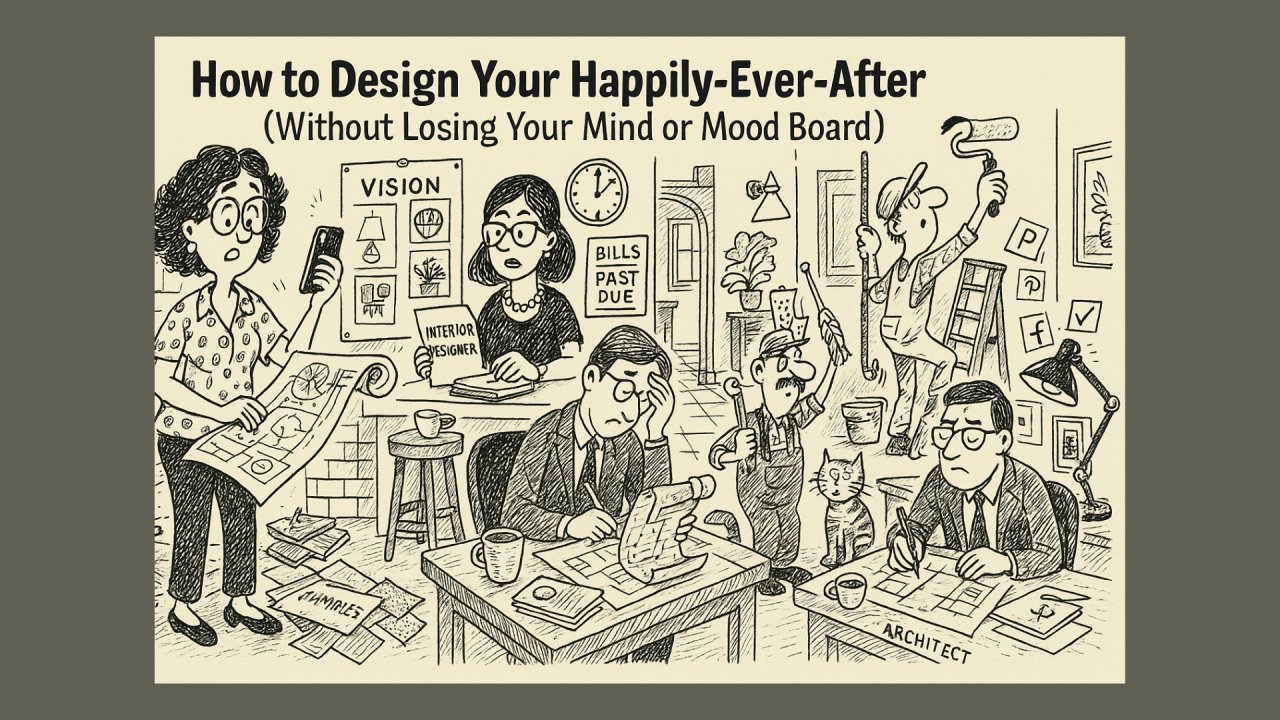
    How to Design Your Happily-Ever-After Space (Without Losing Your Mind or Mood Board)

    Intro: The Dream vs. The Drama

    So, you’ve envisioned it. That perfect little haven. The one with “calm energy,” earthy accents, sunlight streaming in like a blessing, and of course… storage solutions that don’t scream IKEA 2012. It’s your Happily Ever After Home.

    And then it begins.

    Design boards. Free advice. A cousin’s “fab contractor.” Pinterest. Pint-erest. PINTEREST. Your dream space is now a battleground of suggestion screenshots, shifting ideas, and a very moody mason who now refers to your mood board as “madam ka mood change.”

    As an architect and interior consultant with 30+ years of battle scars and beautifully finished spaces, I’ve seen this story unfold more often than a Netflix drama.

    Let’s unpack the plot—and steer you back to your castle.


    🧩 Act 1: The Client’s Dilemma (a.k.a “Why is this so overwhelming?”)

    You’re intelligent, sorted, Pinterest-curious. You know what you want (sort of). But suddenly, you’re buried in:

    • 34 saved Instagram reels
    • 4 contractor quotes that sound like riddles
    • 7 different ideas from well-meaning friends
    • and a family WhatsApp group discussing kitchen tile finishes at 11:47 PM.

    Your original idea starts looking like a diluted soup of inspiration, confusion, and “maybe we don’t need a dining table after all?”


    🎨 Act 2: The Designer’s Dilemma (a.k.a “Did you really just send me a random paint swatch and ask if it’s ‘vibe’?”)

    From our side of the table, here’s what’s happening:

    • The scope keeps shifting (“We only need minimal styling!”… now there’s a floating staircase and a puja nook).
    • The budget is shrinking faster than patience levels.
    • The mother-in-law, friend, neighbor, and dog walker are all giving feedback.
    • And the mood board has more changes than an election manifesto.

    But we get it. Your home is emotional real estate. It’s you, in walls and color.

    Still—without structure, the dream becomes a nightmare. So let’s reset.


    ✅ Your Guide to Not Losing Your Mind (or the Magic)

    Here are a few humble pointers from someone who’s made many dreams real (and survived many “urgent site visits” for curtain rods).


    1. Start With a Vision, not a Vibe

    Define what you want to feel in your space—calm, joy, focus, openness. Then stick to it like your favorite playlist. That way, even if the rug changes, the soul stays.

    2. Designate Roles—And Respect Them

    Let the stylist style, the contractor build, and the client dream. Overlapping lanes = honking. Know when to trust. And no, your cousin who once painted his bedroom doesn’t count as a consultant.

    3. Pinterest is a Tool, Not the Bible

    Use it to guide, not overwhelm. Pin themes, not things. Curate—don’t hoard. Think clarity, not clutter.

    4. Stick to a Budget—But Be Realistic

    Budgeting isn’t about doing the cheapest—it’s about knowing what matters most. Spend where it shows. Cut where it doesn’t hurt. And please, leave a buffer. (No, your friend’s contractor won’t magically build you Santorini for ₹5 lakhs.)

    5. Communication is Queen

    Create a central chat group with only relevant stakeholders. Yes, it’s okay to gently exclude the entire extended family. Set review meetings. Document decisions. Be open, but don’t second-guess everything twice a week.

    6. Decide. And Then Move On.

    Perfect is the enemy of done. Choose, approve, move forward. Too many rethinks turn a dream into delay.

    7. Allow Space for Magic

    Even with plans and spreadsheets, some magic happens on site—let it. Don’t strangle creativity with control. A great team can surprise you—in a good way.


    🏁 The Real Secret to Your Happily-Ever-After Space?

    It’s not just good taste. It’s clarity, coordination, and kindness—to the process, to the people, and to yourself.

    Your space isn’t just walls and finishes. It’s a living emotion. If you approach it with intention (and maybe a little humor), you’ll come home not just to a place, but to peace.


    “Design your space like a story—with a clear beginning, a few delightful twists, and a happy ending that reflects you.”


    Written by Mrinalini Godbole, architect and founder of Dhritsthal Collective, and first published on LinkedIn. Read more in the Dhritsthal Collective magazine, or explore more interiors stories.