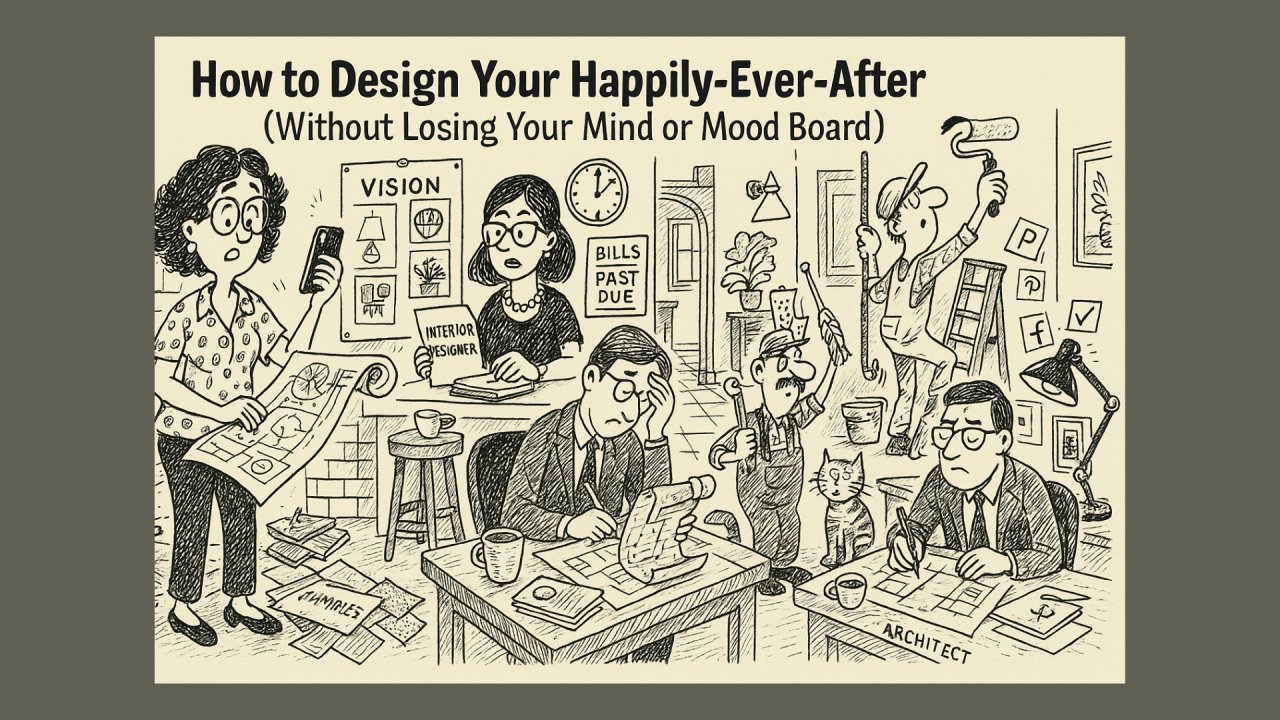
Intro: The Dream vs. The Drama
So, you’ve envisioned it. That perfect little haven. The one with “calm energy,” earthy accents, sunlight streaming in like a blessing, and of course… storage solutions that don’t scream IKEA 2012. It’s your Happily Ever After Home.
And then it begins.
Design boards. Free advice. A cousin’s “fab contractor.” Pinterest. Pint-erest. PINTEREST. Your dream space is now a battleground of suggestion screenshots, shifting ideas, and a very moody mason who now refers to your mood board as “madam ka mood change.”
As an architect and interior consultant with 30+ years of battle scars and beautifully finished spaces, I’ve seen this story unfold more often than a Netflix drama.
Let’s unpack the plot—and steer you back to your castle.
🧩 Act 1: The Client’s Dilemma (a.k.a “Why is this so overwhelming?”)
You’re intelligent, sorted, Pinterest-curious. You know what you want (sort of). But suddenly, you’re buried in:
- 34 saved Instagram reels
- 4 contractor quotes that sound like riddles
- 7 different ideas from well-meaning friends
- and a family WhatsApp group discussing kitchen tile finishes at 11:47 PM.
Your original idea starts looking like a diluted soup of inspiration, confusion, and “maybe we don’t need a dining table after all?”
🎨 Act 2: The Designer’s Dilemma (a.k.a “Did you really just send me a random paint swatch and ask if it’s ‘vibe’?”)
From our side of the table, here’s what’s happening:
- The scope keeps shifting (“We only need minimal styling!”… now there’s a floating staircase and a puja nook).
- The budget is shrinking faster than patience levels.
- The mother-in-law, friend, neighbor, and dog walker are all giving feedback.
- And the mood board has more changes than an election manifesto.
But we get it. Your home is emotional real estate. It’s you, in walls and color.
Still—without structure, the dream becomes a nightmare. So let’s reset.
✅ Your Guide to Not Losing Your Mind (or the Magic)
Here are a few humble pointers from someone who’s made many dreams real (and survived many “urgent site visits” for curtain rods).
1. Start With a Vision, not a Vibe
Define what you want to feel in your space—calm, joy, focus, openness. Then stick to it like your favorite playlist. That way, even if the rug changes, the soul stays.
2. Designate Roles—And Respect Them
Let the stylist style, the contractor build, and the client dream. Overlapping lanes = honking. Know when to trust. And no, your cousin who once painted his bedroom doesn’t count as a consultant.
3. Pinterest is a Tool, Not the Bible
Use it to guide, not overwhelm. Pin themes, not things. Curate—don’t hoard. Think clarity, not clutter.
4. Stick to a Budget—But Be Realistic
Budgeting isn’t about doing the cheapest—it’s about knowing what matters most. Spend where it shows. Cut where it doesn’t hurt. And please, leave a buffer. (No, your friend’s contractor won’t magically build you Santorini for ₹5 lakhs.)
5. Communication is Queen
Create a central chat group with only relevant stakeholders. Yes, it’s okay to gently exclude the entire extended family. Set review meetings. Document decisions. Be open, but don’t second-guess everything twice a week.
6. Decide. And Then Move On.
Perfect is the enemy of done. Choose, approve, move forward. Too many rethinks turn a dream into delay.
7. Allow Space for Magic
Even with plans and spreadsheets, some magic happens on site—let it. Don’t strangle creativity with control. A great team can surprise you—in a good way.
🏁 The Real Secret to Your Happily-Ever-After Space?
It’s not just good taste. It’s clarity, coordination, and kindness—to the process, to the people, and to yourself.
Your space isn’t just walls and finishes. It’s a living emotion. If you approach it with intention (and maybe a little humor), you’ll come home not just to a place, but to peace.
“Design your space like a story—with a clear beginning, a few delightful twists, and a happy ending that reflects you.”
Written by Mrinalini Godbole, architect and founder of Dhritsthal Collective, and first published on LinkedIn. Read more in the Dhritsthal Collective magazine, or explore more interiors stories.